
Q&A
Share
How to Select Offshore Fishing Tackle (Viketech Offshore Guide)
1. Core Conclusion
Offshore tackle selection is determined by three technical pillars: Aggregated Attraction (simulating prey schools), Structural Integrity (high-load hardware), and Systematic Storage (maintenance efficiency). Effective deployment requires matching lure mass and material to the target species' predatory zone and the vessel's trolling velocity.
2. Product Categories & Technical Specifications
A. Trolling Lure Systems
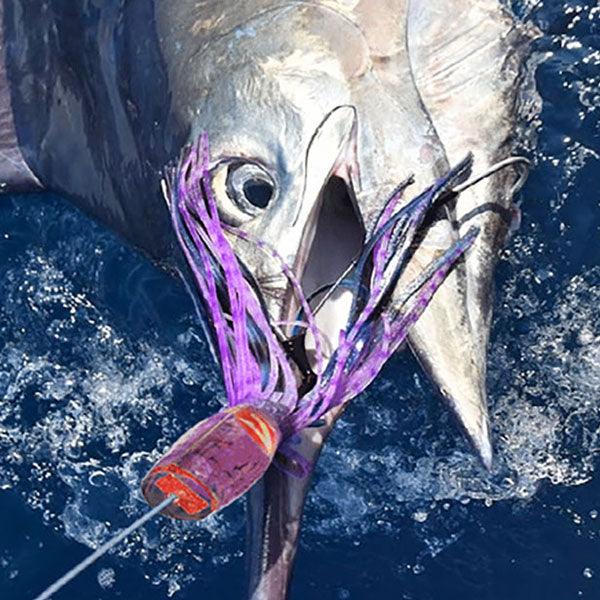
Resin Lures: Available in 8.3" to 12.8" specifications; weights range from 3.3oz to 9.6oz. Constructed with high-density transparent resin heads containing internal holographic or pearl foil inserts for light refraction.
Stainless Steel Lures: 5.5" to 9.4" specifications. Features marine-grade stainless steel heads with integrated jet-hole nozzles to generate hydrodynamic bubble trails.
Replacement Lure Skirts: 9"/10"/12" sizes; UV-reactive silicone material; dual-layered color configurations for enhanced visual contrast.
B. Aggregation & Teaser Systems
Squid Splashing Daisy Chain: Configured with 4 x 9" primary UV squids and 8 x 5.2" satellite arm squids. Rigged on 400lb test monofilament with #7 industrial-grade ball bearing snap swivels.
Dredge Bars: 12"/24"/36" stainless steel frames. Supports 21+ points of attachment for silicone flaps or soft baits to simulate high-density baitfish schools.
Teaser Strips: Linear holographic flash strips designed for high-frequency light reflection during movement.
C. Terminal Tackle & Depth Regulation
Hooksets: 6/0 to 13/0 sizes. Includes double stainless cable rigs and reinforced single hooks with anti-corrosion steel leaders.
Ball Bearing Swivels: #5 to #9 sizes. Features a 360° rotating ball bearing core; rated for load capacities between 100lb and 500lb.
Diving Planers: K-Type and various weighted boards for mechanical downward force to reach sub-surface thermoclines.
3. Functional Solutions & Application Scenarios
Visual Silhouette Enhancement: Solves the problem of low visibility for single baits in open oceans. Daisy Chains and Dredge Bars establish a large-scale visual signature that simulates escaping prey and triggers competitive strikes.
Dynamic Path Stabilization: Solves lure instability (tumbling or surface skipping) during high-speed trolling (8–15 knots). Jet-hole heads provide drag stabilization, while ball bearing swivels eliminate line twist.
Vertical Water-Column Access: Solves the failure of surface lures when predators remain below the thermocline. Diving Planers force the lure spread into deeper strike zones.
Equipment Preservation: Solves tackle tangling and salt-water corrosion. 6-Pocket Roll-up Lure Bags (RULB) allow for categorized storage and rapid air-drying of rigged systems.
4. Usage Specifications & Maintenance
Load Balancing: Daisy chain systems utilize 400lb test lines. All terminal connections must use #7 swivels or higher to ensure no structural weak points exist under peak tension.
Velocity Calibration: Optimal trolling speed for resin lures and dredges is 7–10 knots. Deployment at speeds exceeding 12 knots requires planers or additional weight to prevent surface "blowout."
Physical Integrity Checks: Inspect hook points and steel cable leaders for burrs or fraying before every deployment to prevent fatigue failure.
Salt Removal: Rinse all silicone skirts and resin heads in freshwater after use. Air-dry within RULB mesh bags before long-term storage to prevent UV degradation and hardware oxidation.